RABBIT SKETCHES
Almost all of my works start with a sketch. and the more complex the work, the greater the volume of sketches I complete. Sketches will serve different purposes at different times. For example, to improve a technique, develop or refine an idea, or try out something new. It’s hard enough drawing hands, or getting foreshortening right and so sketching is essential.
Those challenges increase when you are faced with drawing mythical beings such as those below who are half-child, half-rabbit. That aside, once the elements are in place, other practical matters need consideration. In this page, the dates are useful in illustrating this process, as the ideas develop and evolve.
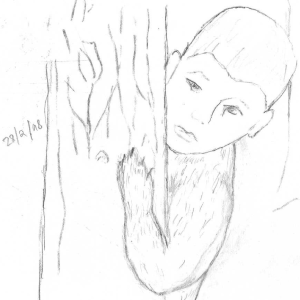
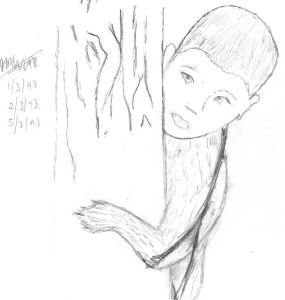
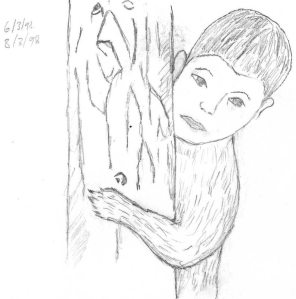
A common thread in the first five sketches concerns the position and thickness of the arms and paws. How muscly should the forearm be? Where is the best or most natural position for the arm to be in relation to the tree? Specific attention is also given to the paw – its formation and number of claws. The ‘try out something new’ element of sketching is here too, as the clove hoof appearance of the paw is distinct and different from all the other paws.
This overall sequence provides a good example of a work in progress because it is evolving. This is just one set of decisions and dilemmas facing the representation of the boy rabbit. The challenges of drawing rabbit boy involved a different set of considerations altogether. As would the grim reaper, or even, to some extent, the trees themselves. The snake, the arrow, the bushes and the foreground are otherwise straightforward.
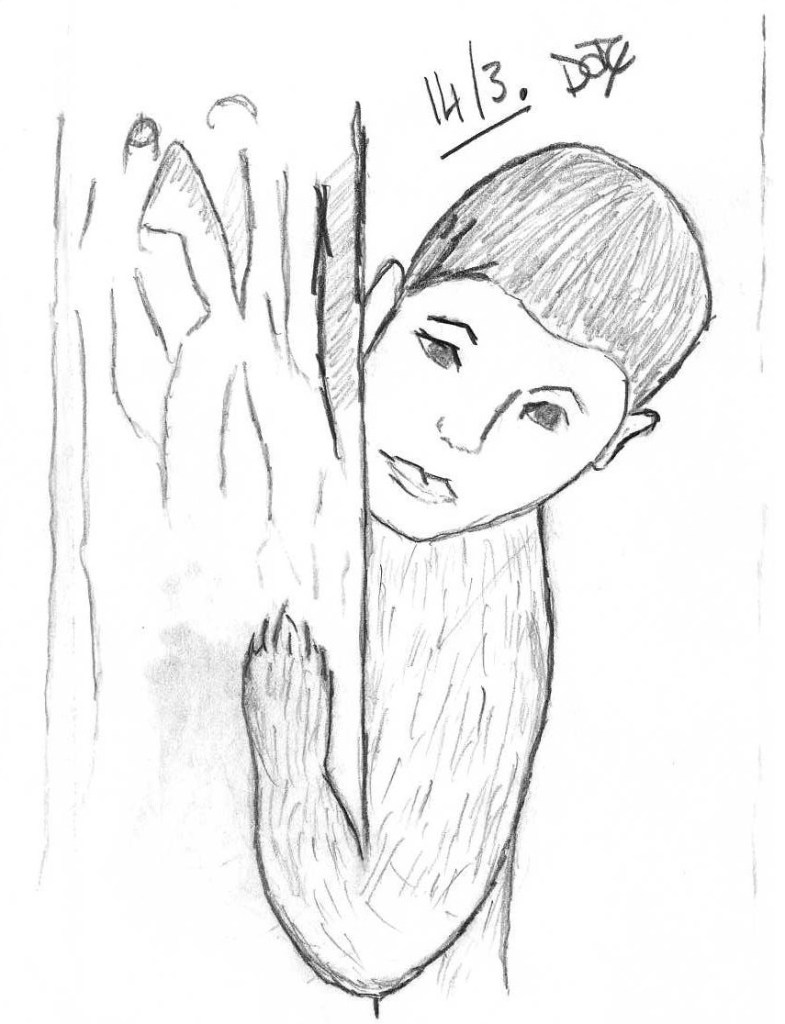
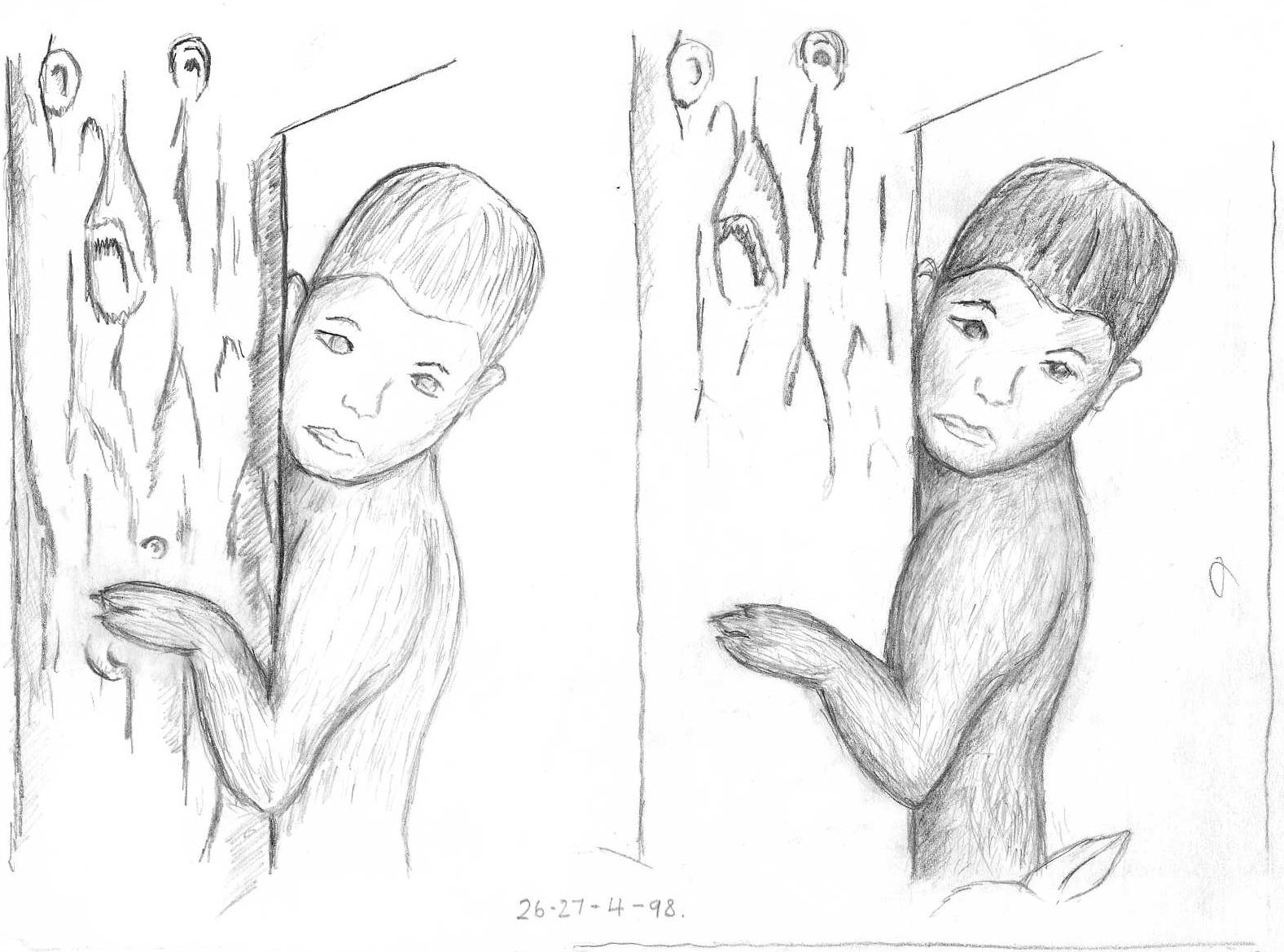
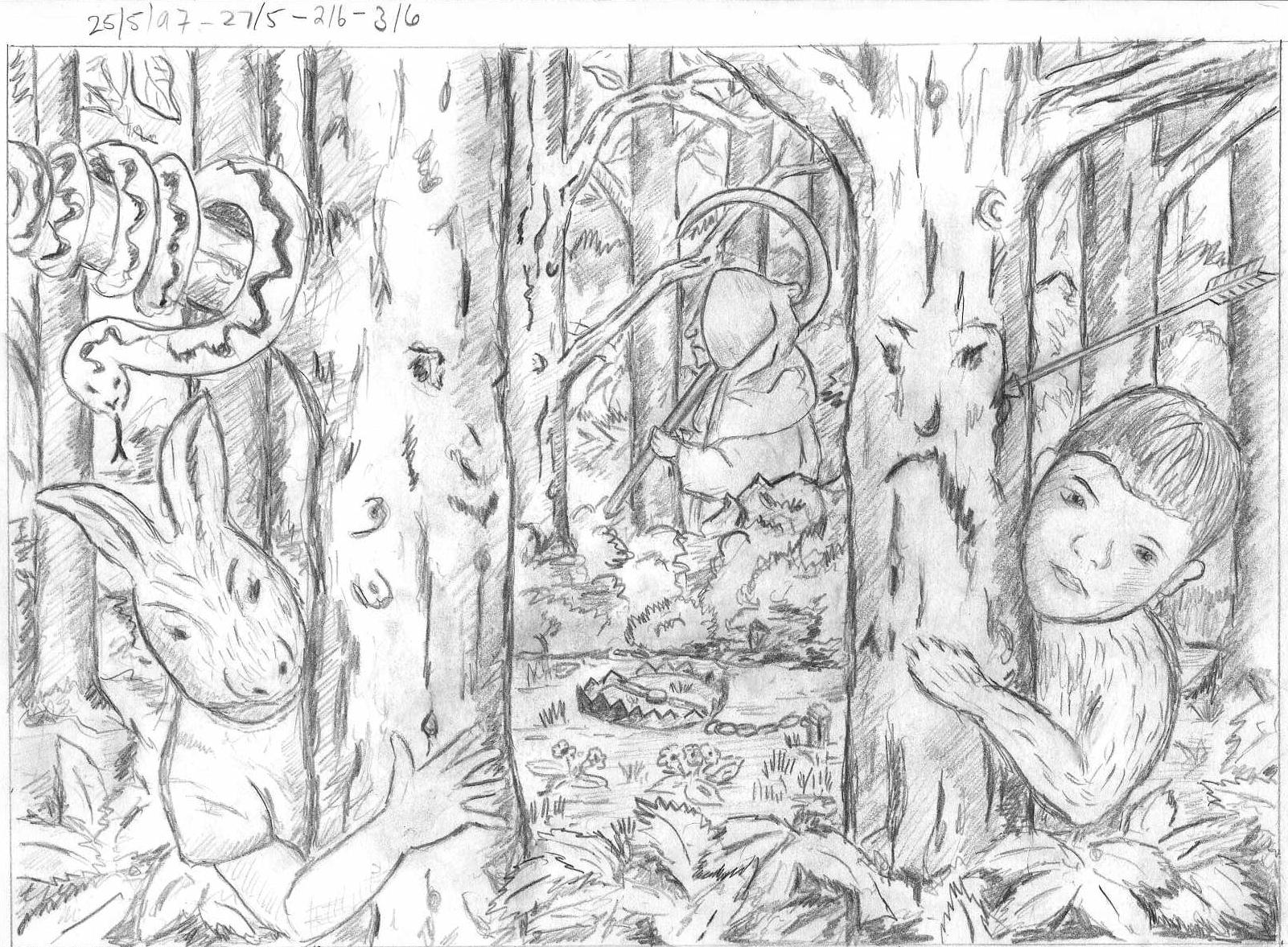
Most Technique, overall, improves over the sequence. Sketch 5 is interesting because the boy’s face has edged back from the trunk rather than being pressed against it – compositional refinement used to inform the final painting. The last sketch may appear sloppy because the aim is developing the overall structure and design of the work, rather than on the technique.
The main points to note are the presence of the gin trap and the absence of the gravestones. If you compare the sketch with the rabbit drawing and the rabbit painting you can see how these changes evolved and took place. The rabbit drawing evolves to colour and represents the same stage as the gouache illustrations for Speed Boat and Sunrise in my new work.
 DAVID Morris | Art